Bottling the first batch
We bottled our first batch of Red Ale. I had bought a bottling contraption that said it would stop filling when the beer got close to the top. Unfortunately, despite having an impressive assortment of hoses and suction devices, we could not get the beer to flow out of the Carboy or a big pot into the beer bottles.
We finally pulled out my first Mr. Beer kit from last year with a little tapper in front of the little keg. We siphoned 2 gallons at a time into the Mr. Beer keg and then filled the bottles from the tap as John capped each bottle.
We produced 9 six packs of Red Ale.
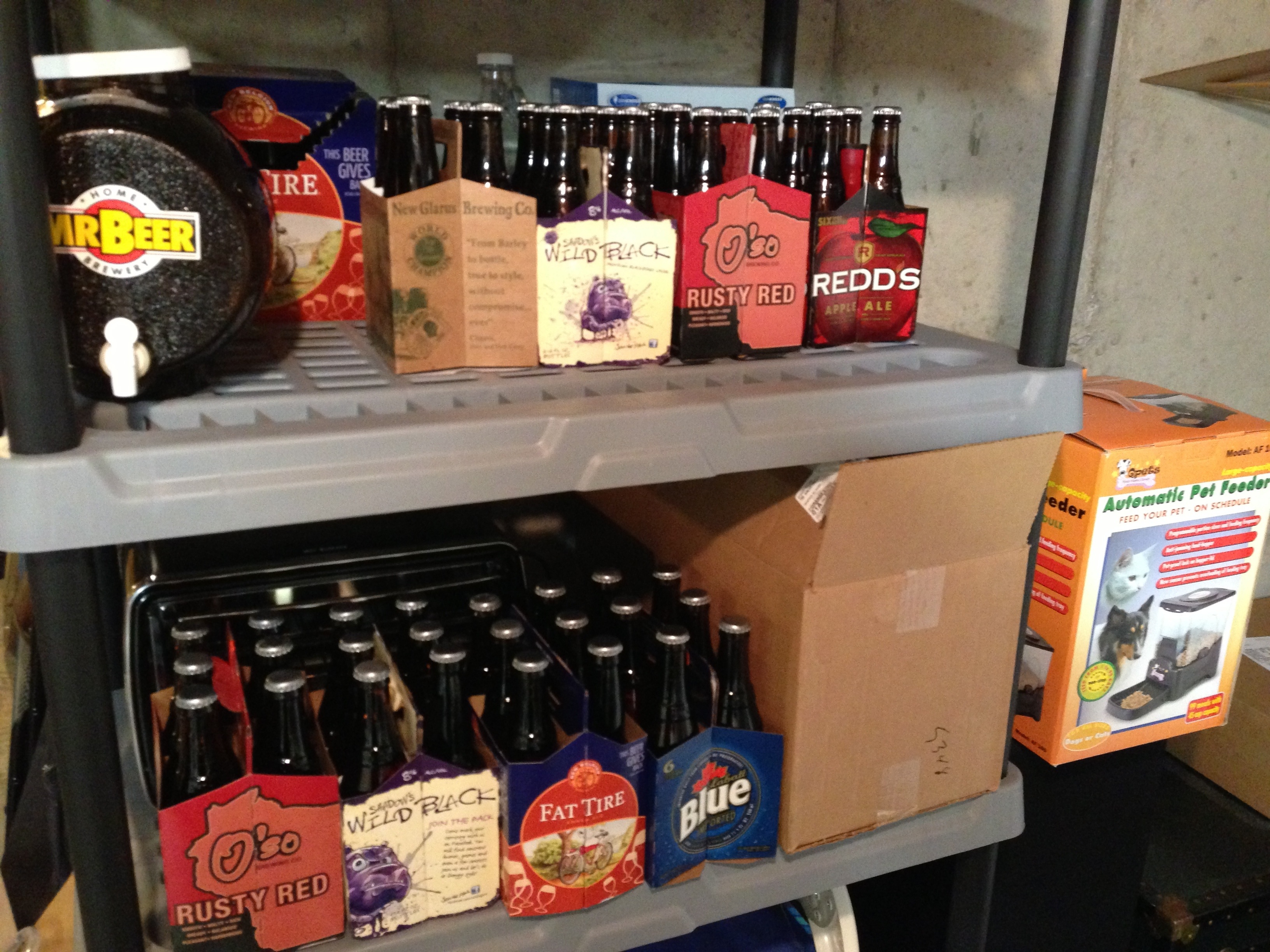
One thing that did work well was the little dishwater to sterilize the bottles before we filled and capped the bottles.
New Big Pot for New Batch of American Pal Ale
John found a big 10 gallon pot, which really helped manage the flash boil of the malt without going over the top of the pot. It is so big that it needed to use all four of the burners on the little stove.
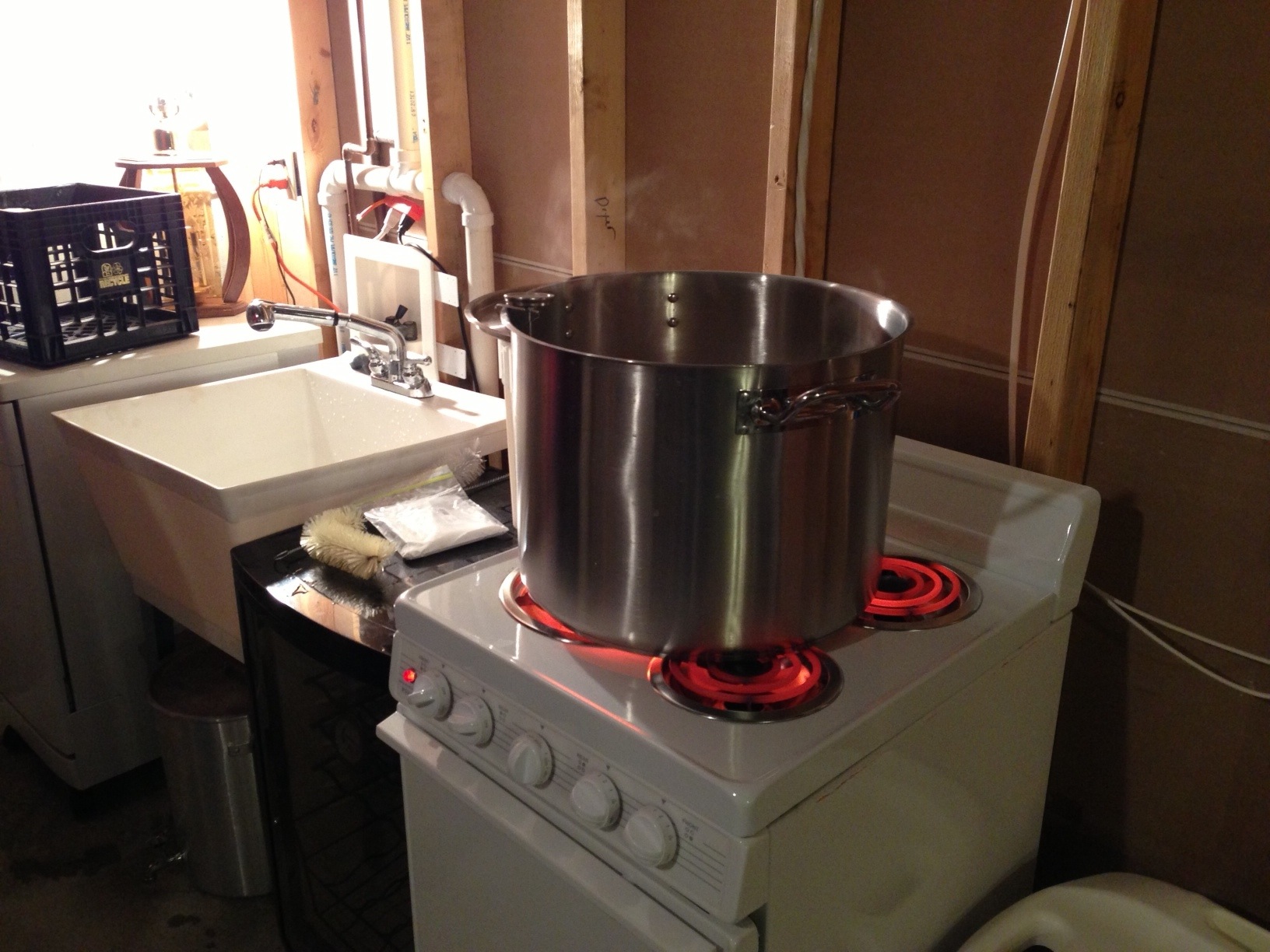
This week we are brewing a nice American Pale Ale. Less grain, more hops, should be a tasty brew!
New Grain Grinder
After rolling a beer bottle to crack the grain last time, we found a grain grinder for sale on-line and bought it. It is designed to attach to a countertop edge.
Needed to construct a shelf from old 2x4s and a 2×6 to hold the new grain grinder. Steve did carpenter work while John sterilized our equipment.
Good to apply a little ancient technology to the work of grinding grain. Note, that we are not making flour! Just need to crack the grain before pouring it into the muslin bag to seep in the 155 degree water.

Transfer Red Ale
After two weeks of conditioning, we siphoned (thanks Tim for the tip) the Red Ale from the 6 gallon carboy into a 5 gallon (pictured). A dash of vodka in the air lock and let the secondary fermentation process do it’s magic.
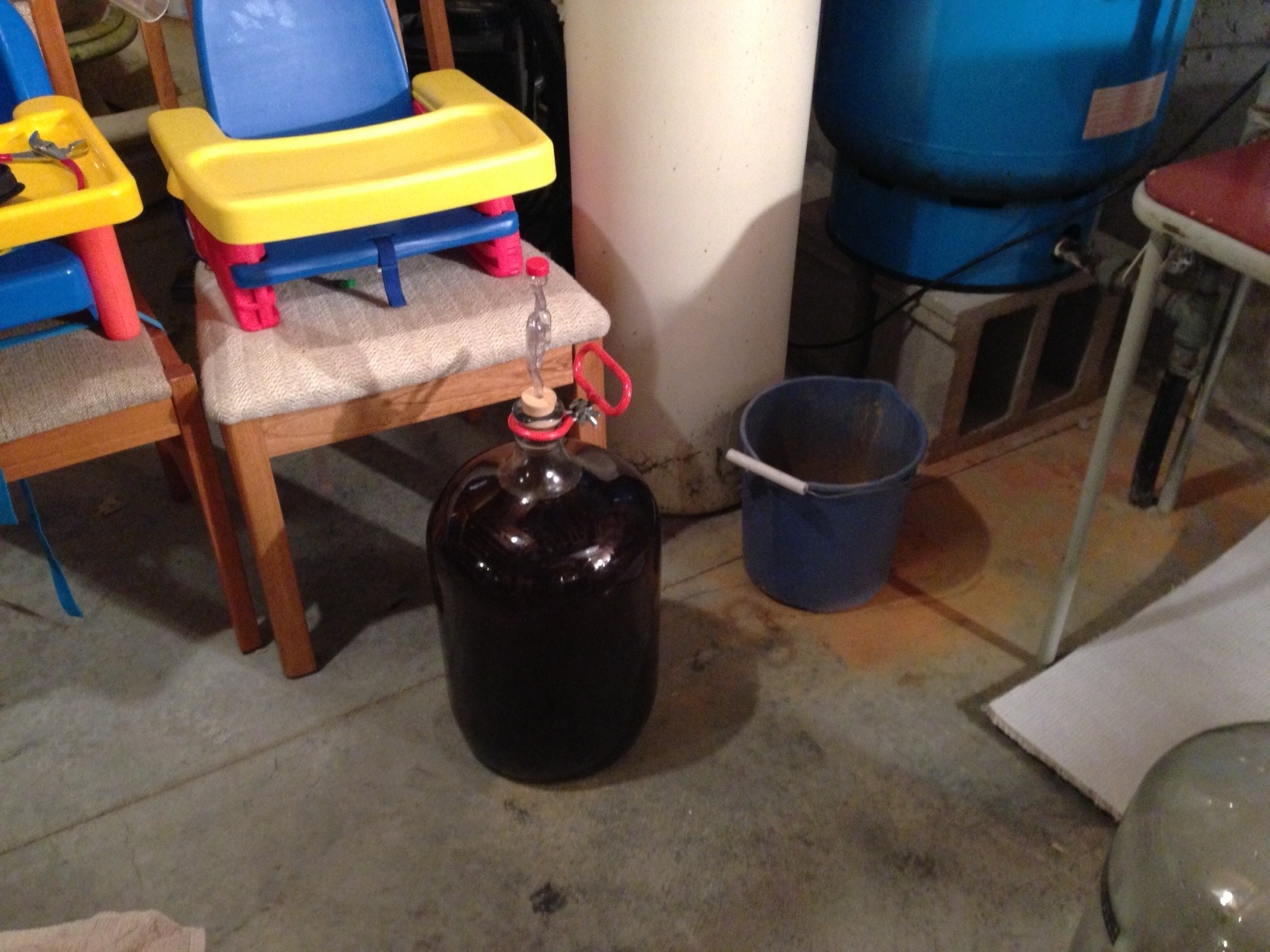
Chemistry is a wonderful thing
Our first batch of Red Ale is fermenting with a nice head. The bubbles are being released from the beer into the pot with sterilized water. Fun to watch our little chemistry experiment work.
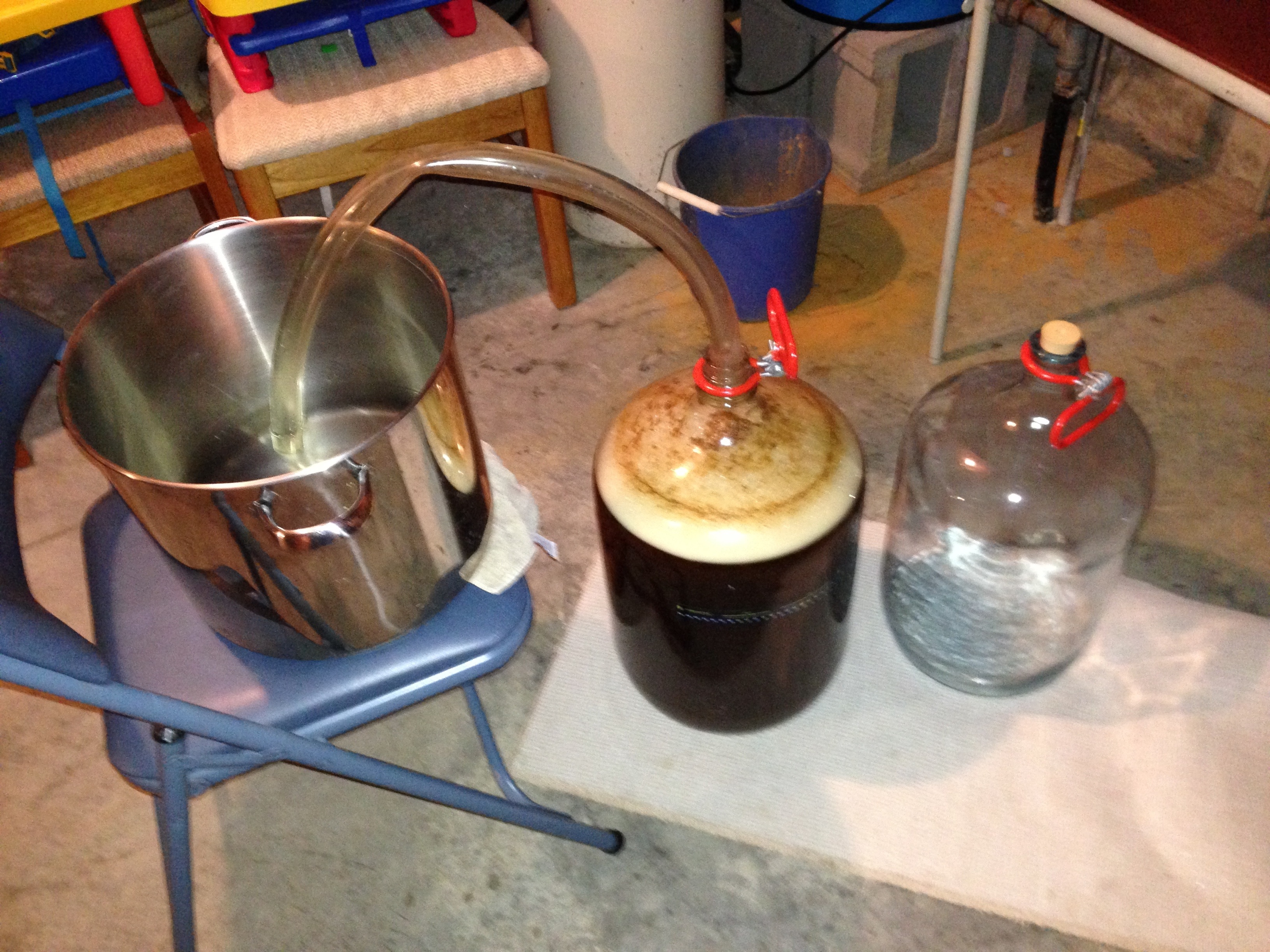
Getting ready for first brew
After hearing the stories from Mineral Spring Brewery about a flash boil over at their first location (Cindy Pelton’s kitchen), Linda the wife of the co-brewmaster (Steve) suggested that instead of a repeat of this problem in her kitchen, we get a stove and sink setup in the basement, so we did. After the obligatory problems with electrical connections on the stove and plumbing problems for the sink and hooking up Kara’s old portable dishwasher, we were set.
Co-brewmaster (John) was able to get brewing equipment from his brother Kevin. We got both 5 & 6 gallon carboys, 20 quart kettle, hoses, funnels, filters, filling tube and an assortment of cleaning supplies and brushes.
We stopped at Os’s Point Brew Supply in Plover to pickup a Red Ale mix, some extra cleaning stuff and some liquid yeast. They were very knowable and helpful at the store.
We enjoyed a nice brunch at Christensen’s Bistro next to Os’s and enjoyed a few Os’s Rusty Reds. Steve told John about buying some land near his home and the common refrain of being called a Land Baron, so we decided to use this as the name of our brewery. We decided our first batch would be called Red Baron’s Red Ale. Ideas were exchanged for labels and logos. We have a few weeks to make this decision before we are ready to bottle.
We cleaned up all of the equipment in the wash tub with the cleaning solution, then ran into our next barrier. The red ale kit had hard grains that needed to be ground up. Without a coffee grinder or even a blender, we ground the grain on a plate with an empty beer bottle (we had one, imagine that). Memo to self, buy a coffee grinder.
The kit came with a muslin bag that we boiled into the pot, like a big tea bag. Next we added the malt extract powder and broke the mix to a boil (while avoiding a boil over) and then added the first bag of hops. 40 minutes later we added the other bag of hops for 20 more minutes. Then we cooled the wort in a snow bank outside. We boiled another pot of water to combine in the carboy to bring to an even 5 gallons.
We debated the need to buy a hydrometer. The instructions suggest having one, but many home brew veterans discount the usefulness.
At the end of the day, the brewmasters are rather pleased after the first attempt at brewing beer!

 Land Baron Brewing